There are almost as many Moroccan Berber rugs as there are Amazigh tribes. The best known are the Beni Ourain, the Mrirt, the Azilal, the Zanafi, the Hanbel (or kilim), the Boucherouite and the Boujaad. Each has its own region, technique and character. In this guide, Safae, founder of Safia Rugs and of Berber descent, explains how to recognise them and which one to choose.
The Moroccan Berber rug: a women's craft
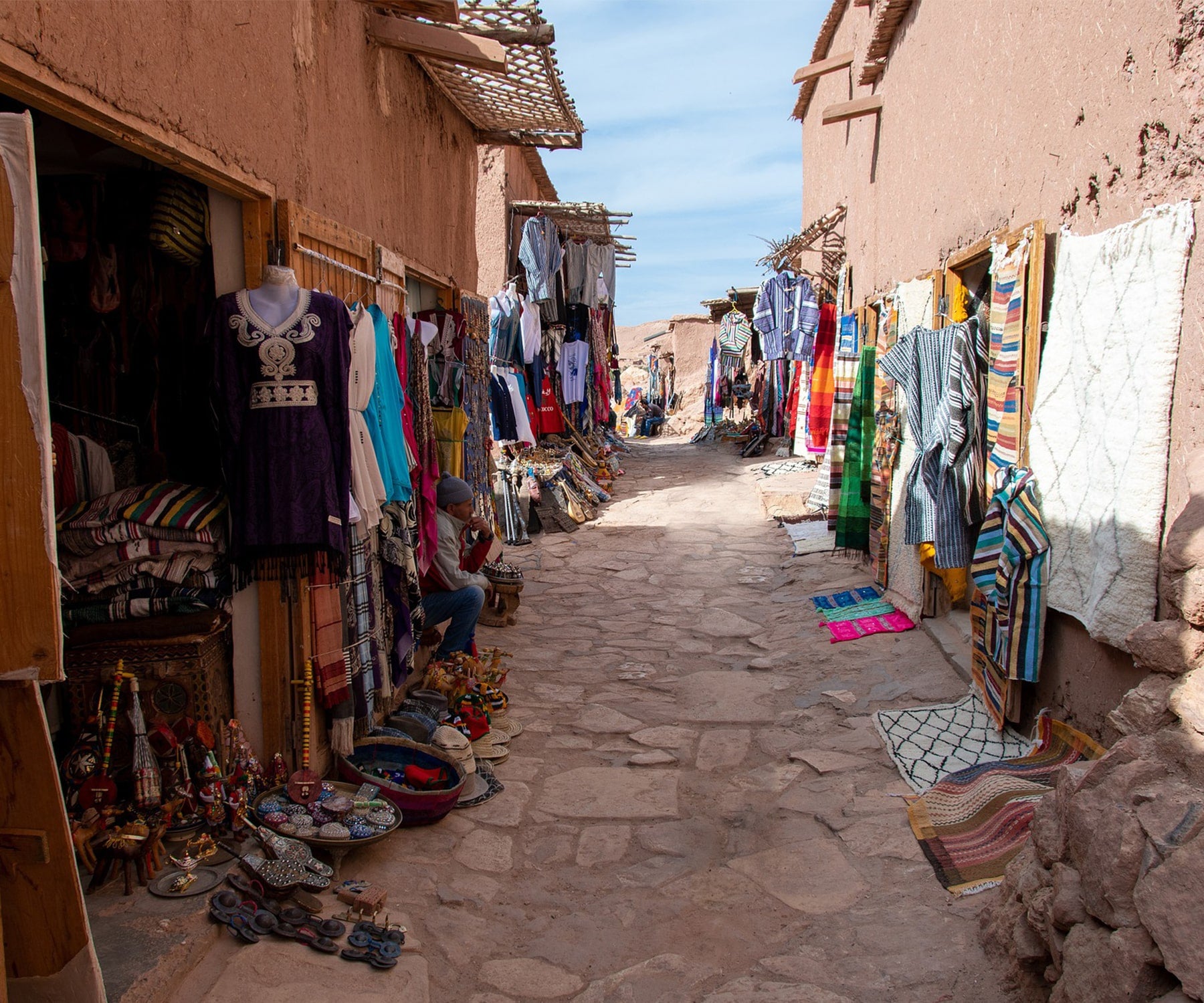
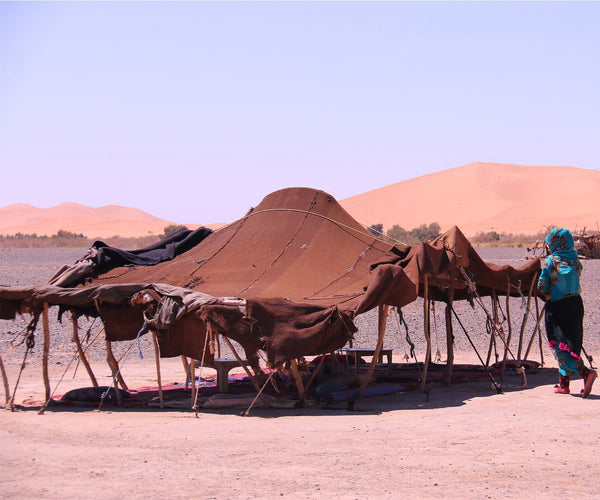
The Berber rug was born from a very practical need: keeping out the cold. Winters are harsh in the Atlas Mountains, and Amazigh families have long woven thick sheep's wool rugs to insulate the floors of their homes and tents. Over time, these rugs became much more than useful objects: they tell the story of the woman who weaves them.
This know-how is passed down from mother to daughter. The patterns, often geometric (diamonds, chevrons, zigzag lines), are symbols of protection, fertility or family life. No two hand-knotted rugs are exactly alike, and that is what gives a real Berber wool rug its value.
Today, the Moroccan rug has become a star piece of interior design, from Paris apartments to Marrakech villas. It works just as well in a Scandinavian interior as in a boho or contemporary one.
The main types of Moroccan Berber rugs
There are two main families: hand-knotted pile rugs (Beni Ourain, Mrirt, Azilal, Boujaad), thick and soft, and flat-woven rugs (Hanbel, kilim), thinner and lighter. The Zanafi sits between the two.
The Beni Ourain rug: the white icon of the Middle Atlas
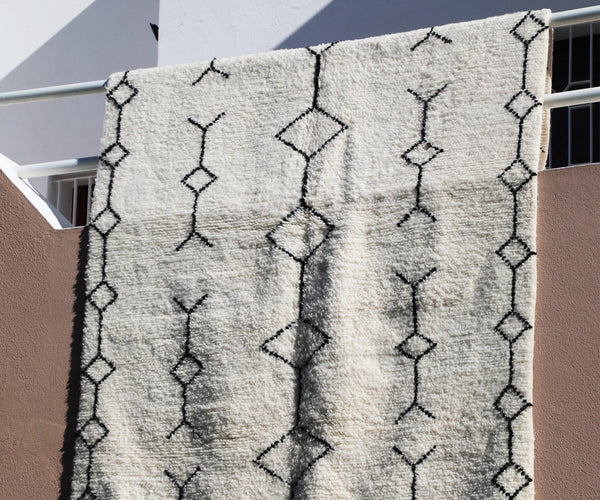
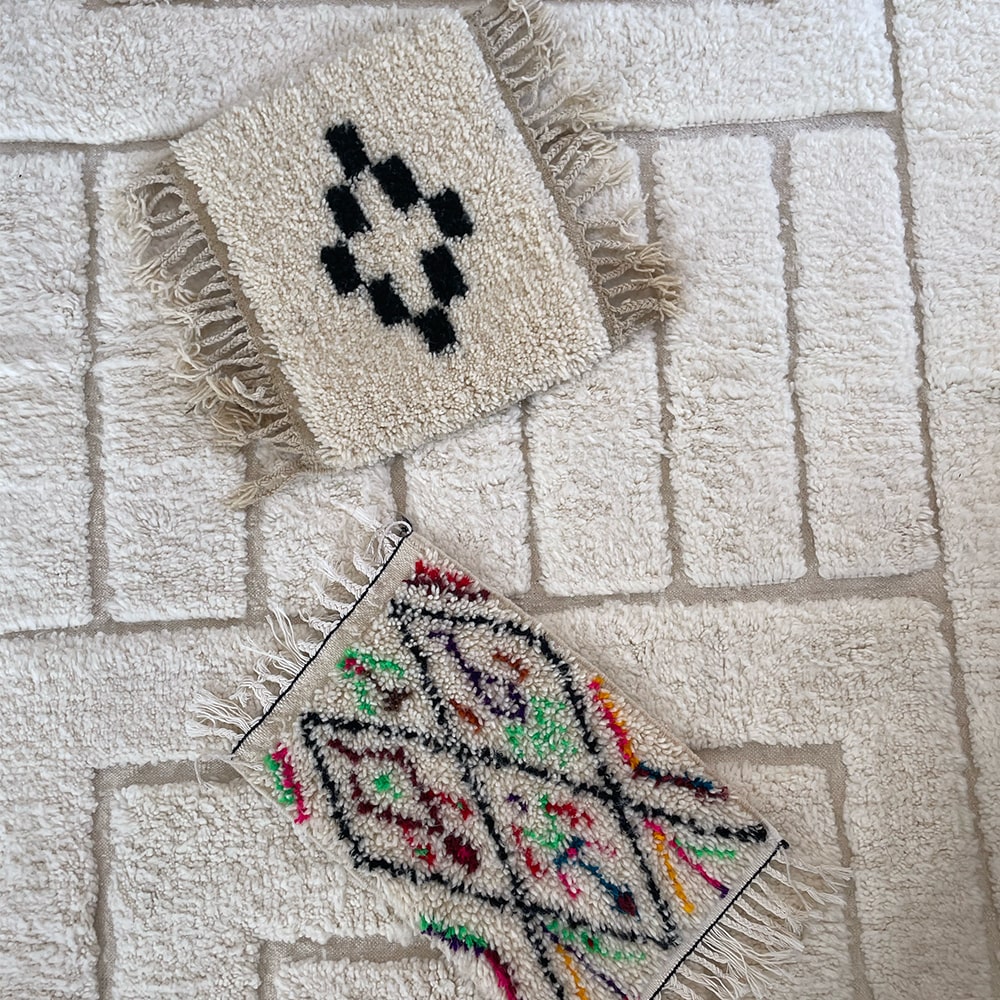
The Beni Ourain rug is the most famous of all Berber rugs. It is woven by the women of the Beni Ourain tribal confederation in the Middle Atlas. You can recognise it by its white or ecru background in natural, often undyed wool, its black or brown geometric patterns (diamonds, lines) and its long, thick pile. It also comes in colourful versions.
It is the ideal rug for a living room or bedroom: warm, soft underfoot and easy to match. To learn all about its history, read our guide to the Beni Ourain rug.
The Mrirt rug: the most refined
From the Mrirt and Khénifra area in the Middle Atlas, the Mrirt rug is considered one of the most precious Berber rugs. Its very tight knots give a dense, velvety wool and raised patterns that play with the light (checks, diamonds, stripes). Its pile is shorter than a Beni Ourain's, which gives it a crisper, more elegant look.
The Azilal rug: colour and creativity
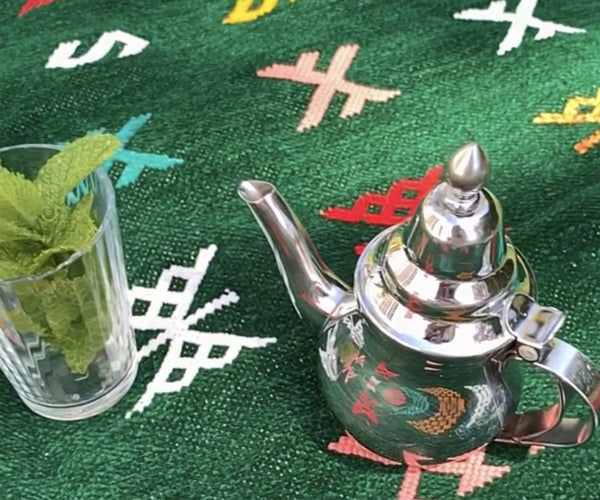
The Azilal rug comes from the province of Azilal in the High Atlas. On an ecru background, the weavers give free rein to their imagination: asymmetric patterns, symbols and bright colours (red, pink, blue, orange). Every Azilal is one of a kind, almost a painting. It is the perfect choice for a colourful Berber rug full of personality.
The Zanafi rug: graphic and easy to live with
The Zanafi rug is a thinner, flat-woven rug, often decorated with graphic patterns: bands, checks, diamonds. Sturdy and easy to care for, it is perfect under a dining table, in a hallway or in a minimalist living room. It is now the best-selling custom rug from our workshop.
The Hanbel rug or kilim: flat weaving
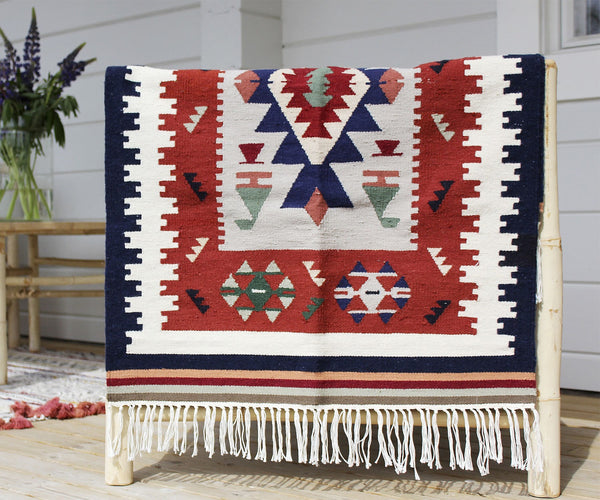
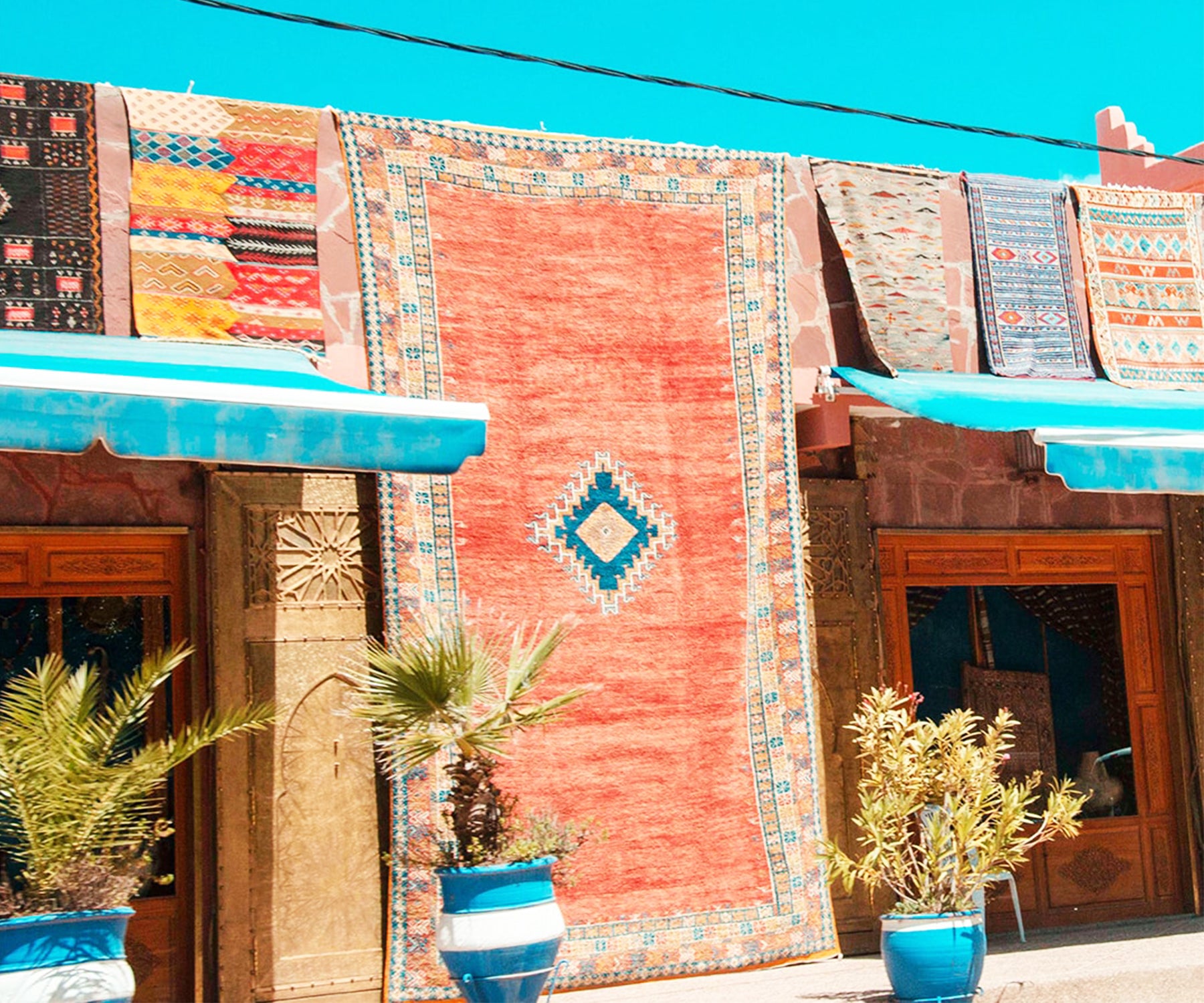
The Hanbel rug, also called a kilim, has no pile: it is flat-woven, which makes it light, reversible and very hard-wearing. Its stripes and geometric friezes, often in red tones, work as well on the floor as on the wall. It is ideal for an entrance hall, a study or a child's bedroom.
The Boucherouite rug: the upcycled rug
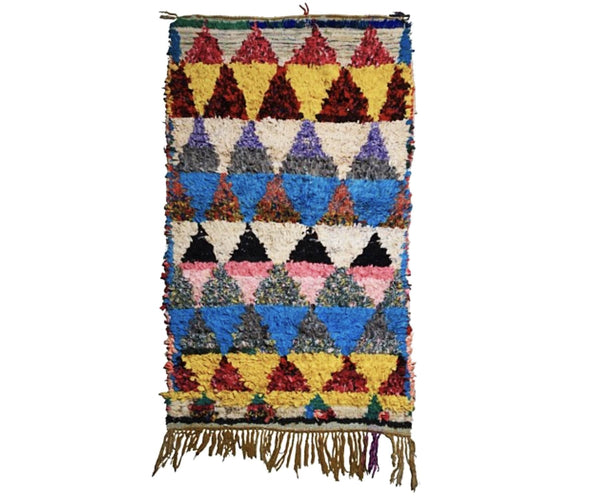
The Boucherouite is a rug in a class of its own: it is not woven from wool but from strips of recycled fabric (old clothes, cotton or synthetic offcuts). The result is a very colourful, joyful and unconventional rug that appeared in the Moroccan countryside in the 20th century.
The Boujaad rug: red and pink tones
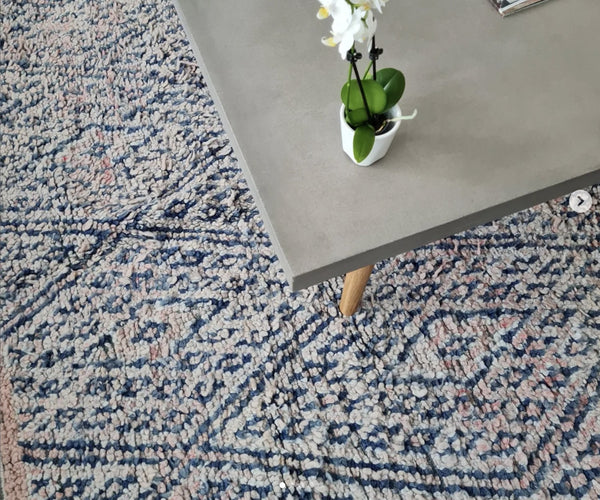
From the Boujad area, in the plains of central Morocco, the Boujaad rug is recognisable by its warm colours, often pink, red and orange, and its freer diamond patterns. It brings a lot of warmth to a living room.
Comparison: which Berber rug should you choose?
| Type | Technique | Style | Ideal for |
|---|---|---|---|
| Beni Ourain | Hand-knotted, long pile | White, black patterns, minimalist | Living room, bedroom |
| Mrirt | Hand-knotted, very dense | Raised patterns, elegant | Living room, bedroom |
| Azilal | Hand-knotted | Colourful, artistic | Living room, child's bedroom |
| Zanafi | Patterned flat weave | Graphic, understated | Dining room, hallway |
| Hanbel / kilim | Flat weave | Stripes, friezes | Entrance, study, wall |
| Boucherouite | Recycled fabrics | Multicoloured, boho | Bedroom, reading corner |
Still unsure? Our guide how to choose the perfect Berber rug for your home helps you find the right size and style for every room.
Safia Rugs, specialists in handmade Berber rugs
At Safia Rugs, all our rugs are hand-woven by Berber women weavers from the Middle Atlas, paid fairly for their work. This is Safae's fight: keeping this craft alive and supporting the independence of the women who carry it. To honour them, our rugs are often named after Amazigh women.
Dreaming of a rug made to the exact size of your room? We make custom Berber rugs, in colours chosen from our chart of 208 wool colours. And to feel the wool before you decide, order a rug sample. You can also see our rugs in our customers' homes.
Frequently asked questions about Moroccan Berber rugs
What is the best-known Berber rug?
The Beni Ourain, with its white background and black diamonds, is the best known worldwide. The Mrirt is known as the most refined, and the Azilal as the most colourful.
What is the difference between a Berber rug and a kilim?
A Berber rug such as the Beni Ourain is hand-knotted and has a pile. A kilim (or Hanbel) is flat-woven with no pile: it is thinner, lighter and often reversible.
How long does it take to weave a Berber rug?
A large hand-knotted rug takes several weeks of work. At Safia Rugs, a custom rug takes about 3 weeks of weaving, and 6 to 8 weeks for a Mrirt.