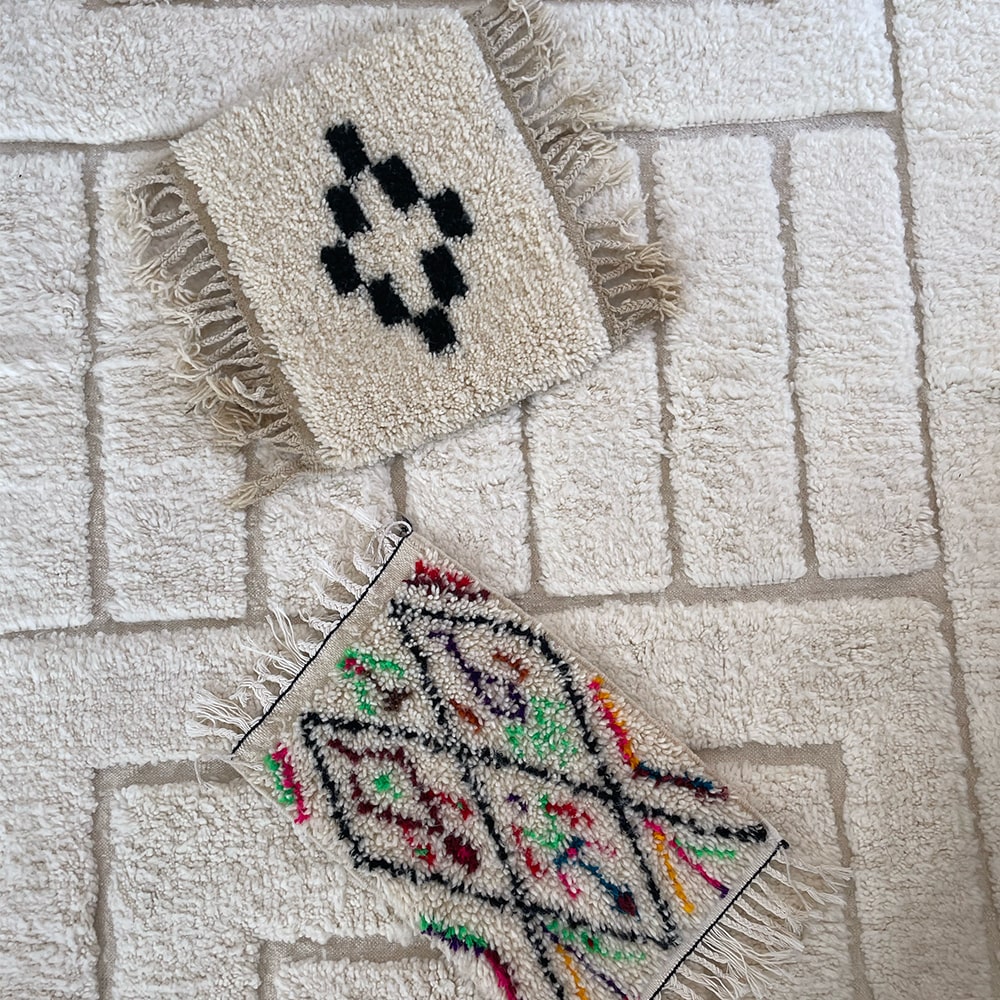
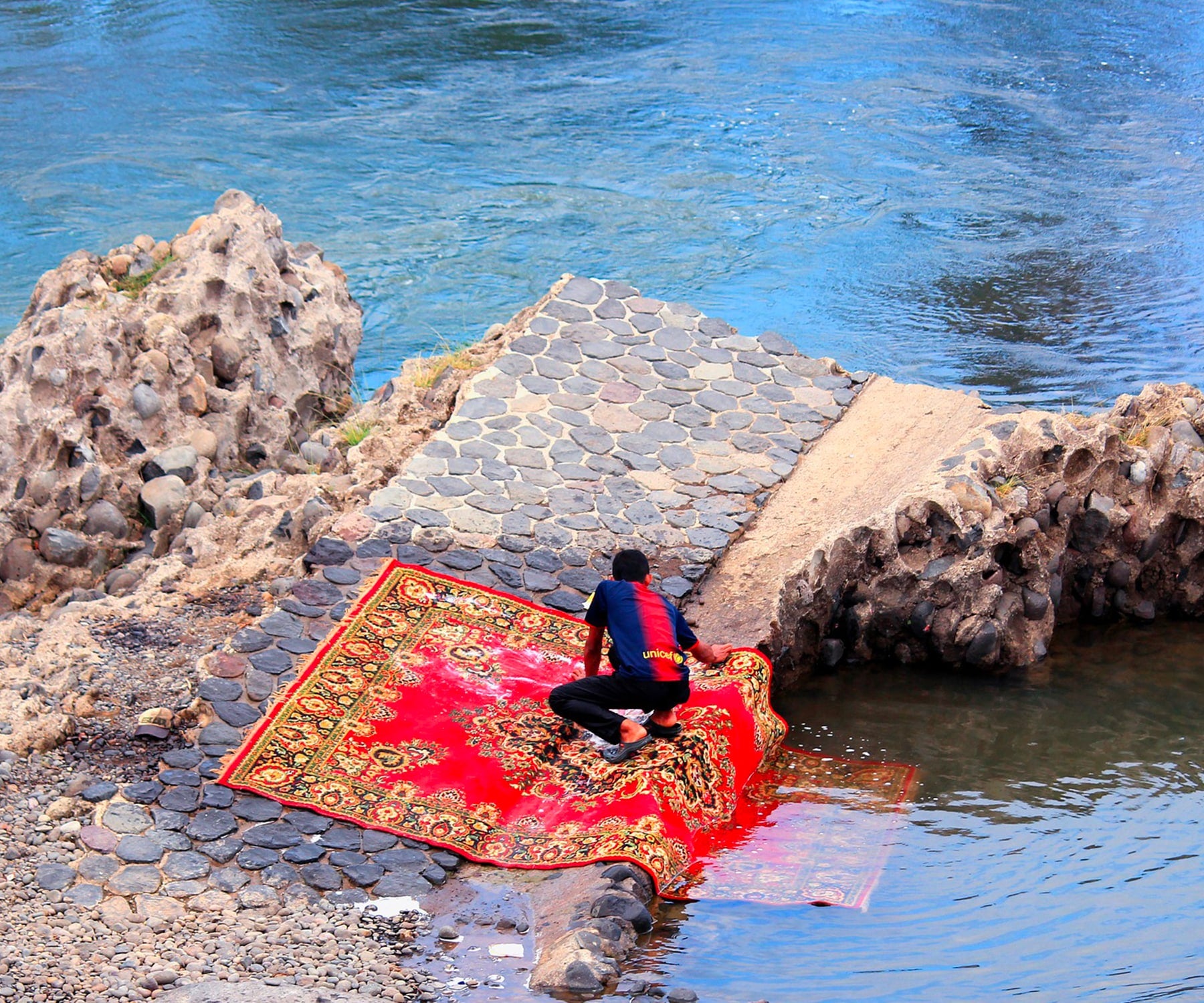
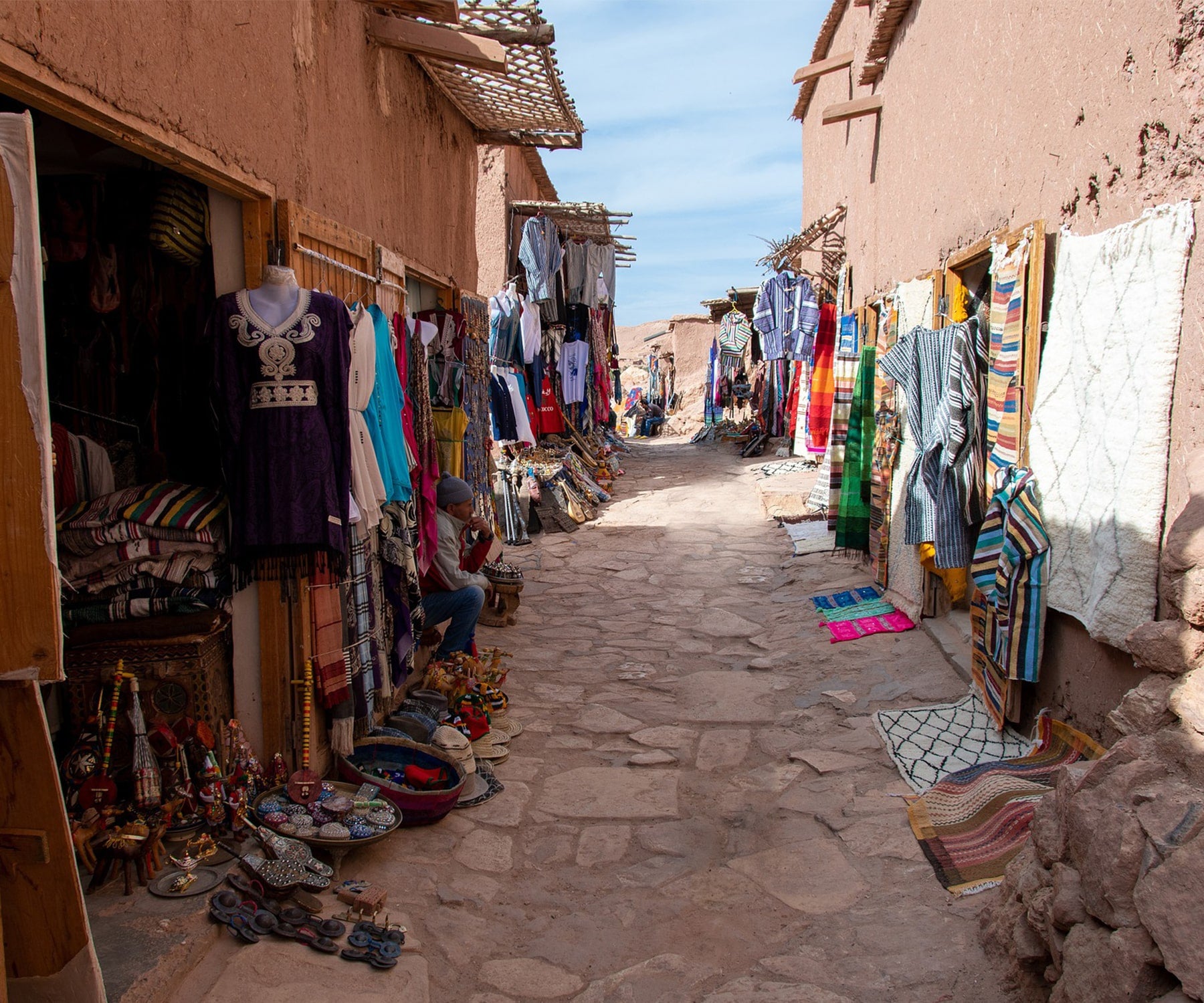
The Beni Ourain rug is the most famous of all Moroccan Berber rugs. Hand-knotted in sheep's wool by the women of the Beni Ourain tribes of the Middle Atlas, it is recognisable by its white or ecru background, its black geometric patterns and its thick, soft pile. History, craftsmanship, price and styling tips: here is everything you need to know before choosing one.
Who are the Beni Ourain?
The Beni Ourain are a confederation of about seventeen Amazigh tribes living in the north-east of the Middle Atlas. In these mountains, winters are long and cold, and sheep farming is at the heart of family life.
Long isolated, these tribes have kept their weaving traditions almost intact. This explains the instantly recognisable style of their rugs: natural wool, lightly dyed or not dyed at all, and simple geometric patterns handed down from mother to daughter.
Why do the Beni Ourain weave rugs?
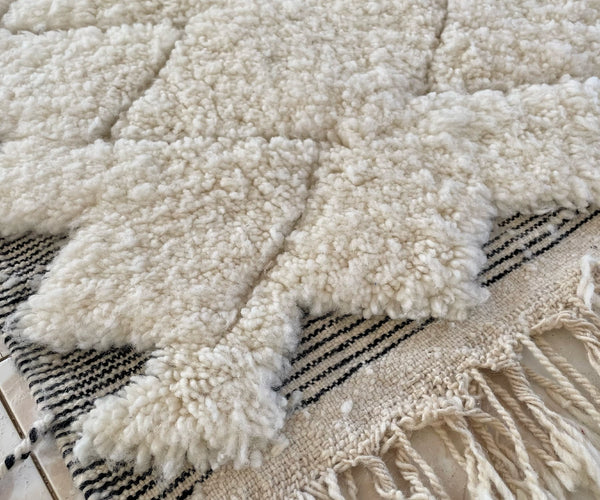
Originally, the Beni Ourain rug had a very practical purpose: keeping out the cold. Thick and dense, it was used as a floor rug, a blanket and sometimes a mattress. Its long wool pile holds in the warmth, and the white wool of Atlas sheep was used just as it was.
The patterns tell the story of the weaver's life. The diamond, which appears very often, is frequently associated with femininity, fertility and the protection of the home.
How is a Beni Ourain rug made?
Choosing and preparing the wool
It all starts with sheep's wool. After shearing, it is washed several times, dried in the sun, carded and spun. For a classic Beni Ourain, the wool keeps its natural off-white or ecru colour. The black or brown lines come from the wool of coloured sheep or from dyed wool.
Hand-knotting
The weaver works on an upright loom. She knots each strand of wool around the warp threads, row after row, then packs the rows down with a comb. The long pile is then trimmed evenly. A large rug takes several weeks of work: at Safia Rugs, allow about 3 weeks for a custom Beni Ourain.
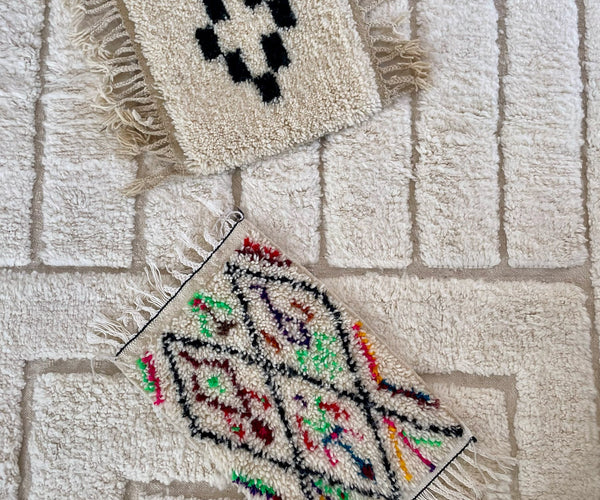
How to recognise a real Beni Ourain
- A natural wool background, white or ecru, not an overly uniform "optical" white.
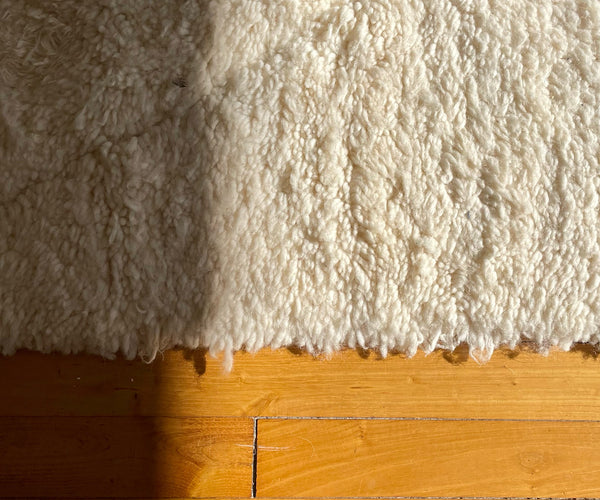
- A long pile (often 2 to 3 cm) and dense, supple, heavy wool.
- Knots visible on the back of the rug and fringes that continue from the warp threads.
- Slight irregularities in the patterns, a sign of handwork.
To go further, read our guide to spotting a real Berber wool rug.
The Beni Ourain weavers
Weaving is a women's craft. In the villages, it has long been an essential source of income and of pride. But with the rise of factory copies, this craft is under threat.
That is why Safia Rugs exists. Our founder, Safae El Otmani, who has worked for women's rights for years, works directly with the weavers, without middlemen, so they are paid fairly for their work. That is our fight.
The Beni Ourain, a design favourite
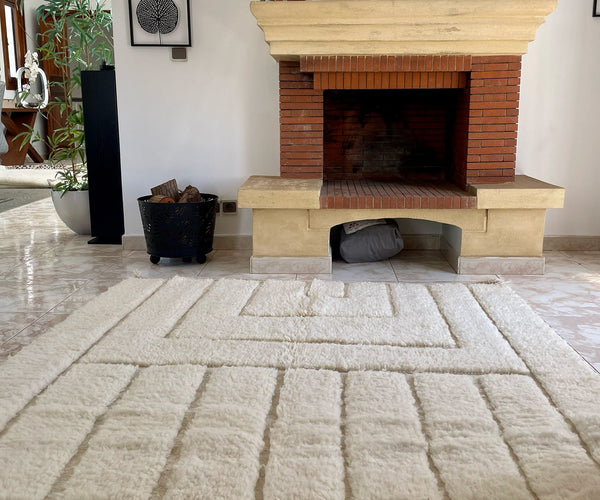
As early as the 20th century, modernist designers and architects adopted the Beni Ourain rug for its simplicity. Today, it can be found in homes all over the world, from Paris apartments to Scandinavian houses.
Our styling tips
- Living room: choose a size that lets you slide the front legs of the sofa and armchairs onto the rug (often 200 × 300 cm).
- Bedroom: place it under the lower two-thirds of the bed so your feet land on wool when you wake up.
- Style: it pairs with light wood, linen and rattan, and warms up a minimalist interior or a concrete floor.
- Colour: for more energy, go for a Beni Ourain with colourful patterns or a dyed background, chosen from our chart of 208 colours.
See our Beni Ourain rugs in their new homes on our Safia in your homes page.
How much does a Beni Ourain rug cost?
The price depends on the size, the density of the wool and the patterns. A real hand-knotted Beni Ourain is an investment, but it lasts for decades. Discover our Beni Ourain rug collection with free shipping, or have yours made as a custom Berber rug. Unsure about the wool? Order a sample first.

Frequently asked questions about the Beni Ourain rug
How do you pronounce Beni Ourain?
Say "beh-nee-wa-reen". You will also see the spellings Beni Ouarain and Béniourain.
Does a Beni Ourain rug shed?
A little, in the first few weeks, like any natural wool. Vacuum it without a rotating brush and the shedding soon fades.
How do you care for a white Beni Ourain?
Vacuum it once a week and treat stains straight away by blotting. All our tips are in the article how to clean a wool rug.
What is the difference between a Beni Ourain and a Mrirt?
Both come from the Middle Atlas. The Beni Ourain has a longer pile and a more "raw" look. The Mrirt is denser and more velvety, with raised patterns.